
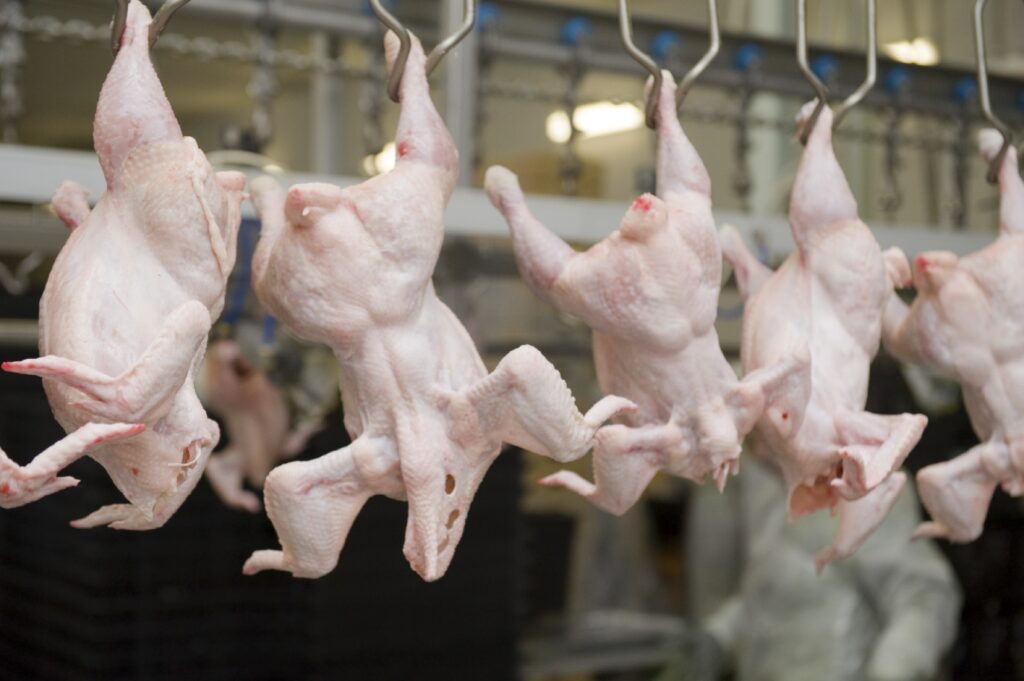
My most recent speaking opportunity was at a multi-faith religious conference, which sounded like an excellent audience to engage on the topic of eating more plant-based and a lot less meat. After all, of the countless reasons to stop supporting industrial animal agriculture, ultimately those reasons could be seen as moral ones, because:
1. For people to regularly eat factory-farmed burgers, yogurt, and chicken breasts requires that we imprison billions of animals and inflict on them lifelong pain and suffering.
2. Mass meat production creates countless environmental and health harms, especially for Indigenous citizens and low-income farmers around the world, encroaching on traditional territories and destroying the biodiversity they need for food sovereignty.
3. Producing animal-source food creates far (far!) more greenhouse gases than it does to produce plant-based ones. Livestock-derived foods of all kinds — not only red meat but dairy and poultry as well — wreak havoc on climate, on public health, and on planetary health.
Our traditions call for compassion and stewardship
So I joined the Walking Together conference at the Vancouver School of Theology. Because I knew that major religions and philosophical traditions call on us to live in ways that embody compassion and stewardship.
I loved the prep, in which I read sacred texts and commentaries from Judaism, Christianity, Islam, Buddhism, Sikhism and more. All of it enjoined humans to care for animals and the planet. I read British scholar and activist Joyce D’Silva, on world religions and their attitudes toward non-human creatures, and was moved when she said: “I have been awed by some of the beautiful writing about animals contained in the scriptures of diverse faiths.”
D’Silva cites examples: Moses showed compassion to a thirsty lamb that had strayed from its flock. Allah gave cattle to the people not only for food and clothing, but for seeing beauty in the animals when driving them out to pasture and bringing them home to rest. Saint Isaac the Syrian described a merciful heart as a heart on fire for all of creation including for the birds and the animals and all that exist.
In my conference presentation, then, I laid out powerful reasons for people to shift their diets toward more lentils, tofu and beans, and away from so much beef, lamb, dairy, and chicken. I kept to my 20-minute limit, didn’t show gory images from factory farms, and assured listeners that no one needs to swear off animal products altogether.
And yet. Despite polite response from audience members, despite the commitment of all participants to living good lives, I went away with the distinct feeling that none of them would change their meal plans. Granted, I didn’t survey participants for before-and-after opinions on the topic. But I don’t know if I changed any minds.
What do you think?
Nudging behaviour change is hard. Let me know your thoughts and experiences here, or reach out to me at eleanor@eleanorboyle.com.