
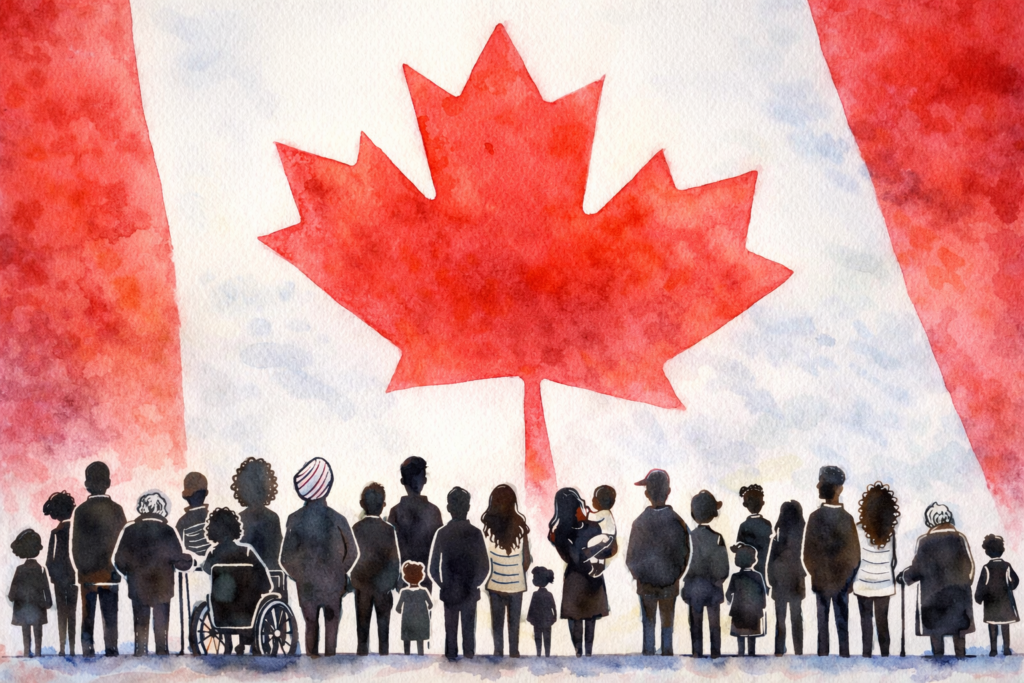
Let’s Get Mobilized
Like many Canadians, I take seriously Trump’s threats to annex Canada. At the very least he wants to tighten the economic screws until annexation looks like our best option. And like so many Canadians, I want to help our government and fellow citizens — in any way — to protect our sovereignty, democracy, and way of life.
That’s why I recently wrote Prime Minister Carney and additional federal ministers the following letter:
My Letter to the Prime Minister
Dear Prime Minister Carney:
Thank you for stating clearly that Canada must prepare for threats to our sovereignty and our liberal democracy. Such preparation must include Canadian civilians and communities. This letter is to suggest that you mobilize all of us.
Now is an excellent moment. Canadian loyalty and patriotism have rarely been higher, especially since threats from the U.S. and your powerful speech at Davos. Letting this moment pass without initiatives that invite citizens into a grand national project would be a missed opportunity for policymakers.
Mobilization could rally and amplify support, as well as outline specific ways that residents of all ages can help in what is essentially national defence.
While researching my recent book on World War II Britain’s rapid food-system transformation, I learned that the UK was a model for this. It successfully — through many channels — encouraged residents to support national projects, conserve food, volunteer in their neighbourhoods, and do whatever they could to bolster the resilience of their beloved nation under attack. British leaders recognized that enthusiastic citizen collaboration and morale would be key to their victory. These will be key to ours as well.
Such a project would be particularly effective if it were to involve all political parties, reminiscent of Winston Churchill’s multi-party war cabinet and programs. Your recent remarks on unity, alongside former Prime Minister Stephen Harper, are welcome — as would be specific ways we all can help.
Like other citizens I want to strengthen Canada, and am willing to make sacrifices. As was said in wartime, we want to “do our bit” and be a resource to our country. A government-led national effort could make that happen.
Sincerely,
Eleanor Boyle
The letter was read by at least one person in the Prime Minister’s Office, which is better than nothing! On March 3 I received a form-ish letter from a PMO executive correspondence officer, saying that my remarks “have been carefully read.” As an optimist, I’m happy at that for now.
Britain’s World War II Preparation Can Inspire Us
I appreciate that all levels of government in Canada are wrestling with the democratic backslide of our southern neighbour and its assault on our longstanding alliance. What I would love to see is our government(s) scale up to match historical efforts. As I detail in Mobilize Food!, in 1930s Britain that involved:
- Extensive planning for crisis readiness, well before actual wartime hostilities
- Messages affirming that everyone had a role to play in helping the country beat Nazism
- Collaboration among governments at every level to mobilize citizens’ strengths, talents, and will to fight back
- Purposeful stewardship of that essential national resource thta was citizen morale[1]
This had a major effect on all UK sectors, including the one that commands most of my research interest: the food system. Ordinary British citizens, civil society, and governments all pitched in to ensure everyone could be fed during the crisis. People grew their own vegetables and ate more plant-based meals, followed rationing rules to limit their intake of scarce commodities, and ate fewer imported foods. In addition to staving off widespread hunger and helping maintain morale despite widespread suffering from the terrible war, food-system innovations actually improved population health.
As I hear in my own social networks, there are Canadian civilians who, like me, are unable to enlist in the armed forces but could serve our country in other ways. I would love to see our nation’s leaders develop strategies and programs that bring us together to learn, brainstorm, cooperate, coordinate, and act in defence of our sovereignty and wellbeing. That might include weekly online community meetings, involving everyone from neighbourhood groups to federal government representatives, to talk about what we can be doing to help. Perhaps it would involve building a comprehensive national database and volunteer-coordination and training system of Canadians with time, skills, and resources to contribute.
Other Nations are Doing it Today
If it sounds overly optimistic to invoke lessons from World War II Britain’s civil mobilization, consider this:
- We are not the only country with a relatively small population and northern vulnerabilities, living in the shadow of a nation that is armed, expansionist, and democratically impaired. Denmark has a whole-of-society defence model, including planning across ministries, volunteer-based territorial defence, public preparedness campaigns, and more. The defence models of Sweden, Norway, and Finland (which shares a long border with Russia) also include elements such as household preparedness, psychological defence, and strong societal consensus around defence. As Canadian author Stephen Marche argues in The Next Civil War: Dispatches From the American Future (Avid Reader Press / Simon & Schuster, 2022), we could study and adapt such models here.
- Canada’s defense community is supported by the Canadian Forces Morale and Welfare Services. It seeks to assist service members and strengthen the readiness of our armed forces. Maybe some of this expertise could help mobilize the volunteer effort of Canadian civilians.
- Not everyone would show up immediately, but that should not discourage us. In their 2011 book Why Civil Resistance Works, Chenoweth and Stephan studied more than 100 years of civil resistance campaigns. They found that nonviolent campaigns often achieved their stated goals even after mobilizing only small percentages of their populations. That’s a source of hope.
Even if the bully down south doesn’t actually invade Canada, he and his yes-people seem hell-bent on weakening Canada. How can we mitigate that? What can we be doing as civilians? How can Prime Minister Carney better tap the underestimated resource of Canadian will to defend our sovereignty?
I’m ready to find out and to sacrifice for my country. How about you?
[1] Historian Robert Mackay captured this in his 2002 book, titled Half the Battle: Civilian Morale in Britain during the Second World War.
Art for citizen mobilization while under attack: This image was created in the British War Office 1941-1946, by artist Abraham Games. He designed more than a hundred public-facing posters that imparted messages about how citizens could contribute to wartime resilience. This one drew attention to the importance – at a time when merchant shipping was being targeted by Nazi U-boats – of becoming more food self-sufficient by taking up gardening.
